

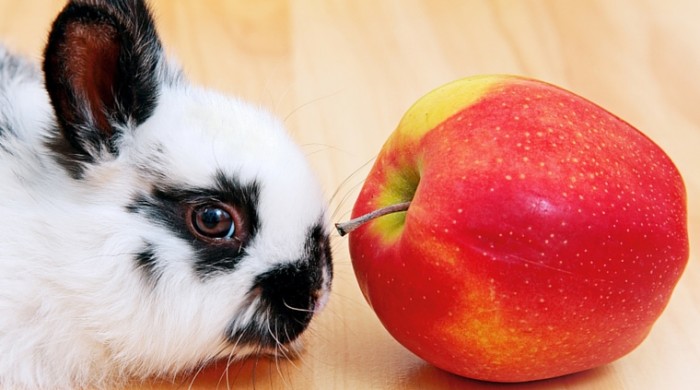
Is it Safe for Bunnies to Have Apple Skin?
Perhaps you keep a rabbit as a pet, or you rear them for commercial purposes. At some point, you must have been wondering what rabbits eat generally. Specifically, you might like to know if rabbits eat apples.
The simple answer is yes. Read along as we shed more light on the topic in this article.
Indeed, rabbits do eat apples, but we advise that you should limit it in their diet. Before you feed your rabbit with apples, ensure that you remove seeds, cores, and stems.
Rabbit’s primary meal is hay; other pellets, vegetables, and fruits are supplements. They should not be the main diet but can be fed to the rabbit in limited quantity.
Cons and Benefits of Apple
Despite being a supplement, apples give a lot of nutritional benefits to your rabbits. Let’s take a quick look at apples in its entirety. Having adequate knowledge of apples will make you understand the advantages of feeding them to your rabbits.
According to scientific classification, apples belong to the family called Rosaceae. Other fruits in the same family include roses, peaches, cherries, and pears. The Rosaceae family has its origin in Central Asia, but their popularity has made them grow worldwide.
Apples are packed full of water and usually very sweet to taste. Rabbits love apples because it has high sugar content. After all, everyone loves sweet things.
Advantages of Apples to Rabbits
As stated earlier, Apple has a lot of benefits in store. Rabbits tap from these benefits when they are fed with apples.
Apples have a high fiber content, which is essential for proper digestion in rabbits. Rabbits thrive on fiber because they lack peristalsis, so they must feed on the right quantity of fiber, and apple is a great fiber source.
Peristalsis is a continuous stomach movement that helps the food go through a rabbit’s digestive tract.
Secondly, apples are high in Potassium and produce a lot of water, which are both ideal for your rabbit’s health.
Potassium’s significant function is to prevent hypokalemia, which denotes a shortage of required Potassium in the body, which could otherwise have caused health issues. Weight loss, cardiac arrhythmias, stunted growth, and muscle weakness are some of the health issues caused by a lower level of Potassium in the body.
Apples equally contain antioxidants, which boost the overall health of the rabbit. Antioxidants are compounds that act as a shield for cells against radicals.
Cons of Apple
As it is with almost every good and beneficial thing, there is always a flaw or little dent that threatens its positive impact. Such is the case of apple. As excellent and nutritional as apples are, they also have harmful substances.
For instance, apple seeds, cores, and stems have cyanogenic present in them. These glycosides are very dangerous to your rabbit. They sometimes result in stomach upset, respiratory issues, vomiting, convulsion, reduced heart rate, and diarrhea. In some rare cases, they can even cause the death of your rabbit.
Rabbits do not have a sense of taste or smell, so they feed on whatever you offer them. It is your duty as the owner to watch what you feed them. So you are to ensure that your rabbit does not consume the parts of apple that can cause them harm.
One effective way to stop your rabbit from consuming toxins is to cut up the apples before offering them to your rabbit. After cutting it up, you remove the stem, cores, and seeds and then feed them to your rabbit.
If you do this, you will be sure that your rabbit is free from toxins and excess sugar.
You will agree with us that too much of anything and everything is not good. Such is the case of apple, which has high sugar content. The sugar content is what makes the apple sweet. But by rabbit standards, the sugar level in apples is relatively too high.
So it is pertinent that you limit your rabbit’s consumption of apples to reduce the risk of high sugar levels. As sweet as sugar is, too much of it can cause diabetes, obesity, and tooth decay in your rabbits when consumed.
This is another reason you have to cut the apple into portions before feeding them to the rabbit. Be sure to regulate how much sugar your rabbit consumes by serving the apple in small portions. When you cut up the apple, do not peel off the skin because it contains a high fiber level.
Ideally, it is advisable to limit apples’ intake in your rabbit’s diet to one or two slices occasionally as a treat.
Ensure that you wash apples well before you feed them to your rabbits. Washing the apple makes it free of pesticides and chemicals, which was added to enhance growth. These chemicals can otherwise be harmful to rabbits when they ingest them.
Finally, a rabbit’s stomach is susceptible, so some rabbits do not cope well with eating apples. Note that every rabbit is different; what works for rabbit A might not work for rabbit B. as the pet owner, you should watch out for how your rabbit reacts to apple. This will make you know whether to include it in its diet or scrap it.
Apple is not the primary diet for rabbits, so you must be cautious when introducing apples and other new foods into their diet. Immediately you feel that your rabbit does not cope well with a particular food, quickly remove it from the diet.
You will know if a meal does not sit well with your rabbit when your rabbit stools or exhibits stomach discomfort.
Conclusion
Do not forget that your rabbit’s primary diet is hay. Treat any other extra meal as a supplement. Essential supplements are pellets and vegetables. For instance, if you feed your rabbit with hay for breakfast and dinner, you can give them supplements for lunch.
Apple is another good supplement as it contains antioxidants, Potassium, water, and fiber. Apple is right for your rabbit as long as you cut it up to remove the toxins (seeds, stems, and cores) before serving them to your rabbit.
So it is crucial to wash your apple well and cut them up to eliminate toxins and chemicals from them to be safe for your rabbits.


